

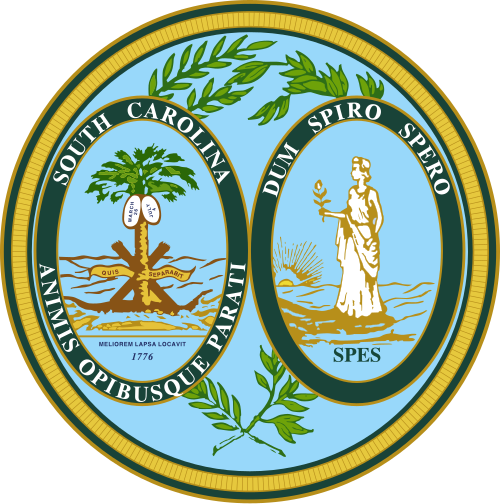

South Carolina State Authority
South Carolina State Authority is home to 5,296,225 residents with median household income $69,324.
Explore South Carolina State Authority by County
Click any county to visit its landing page.
South Carolina State: What It Is and Why It Matters
South Carolina occupies a specific and consequential position in American civic life — 46 counties, a full branch-and-agency government structure, a population of approximately 5.3 million people (U.S. Census Bureau, 2023 estimate), and a legal framework that touches everything from property transfers to public school funding. This page maps that framework: what South Carolina's state system is, how its moving parts connect, and why the distinction between state, county, and municipal jurisdiction matters in practical terms. The content library here spans county profiles, government branches, state agencies, and major cities — a working reference for anyone navigating South Carolina's civic landscape.
How This Connects to the Broader Framework
South Carolina does not exist in administrative isolation. The state operates within the federal structure established by the U.S. Constitution, which reserves to states all powers not explicitly delegated to the federal government — a provision that makes state-level knowledge genuinely non-substitutable. What the federal government does not regulate, South Carolina regulates. What Columbia decides, the counties administer. What the counties administer, municipalities sometimes override within their own limits, and sometimes cannot.
This site is part of the United States Authority network, which covers the full sweep of American civic infrastructure at the national level. South Carolina-specific content lives here, with a particular focus on how state structures operate on the ground — not in theory, but in the specific counties, courts, agencies, and offices where decisions actually get made.
The companion resource South Carolina Government Authority goes deep on the mechanics of state governance — legislative process, agency rulemaking, executive branch structure, and how public accountability functions across state institutions. It is the right starting point for anyone whose question begins with "how does South Carolina government actually work?"
Scope and Definition
South Carolina is a constitutional state within the United States, admitted to the Union on May 23, 1788, as the 8th state to ratify the Constitution (National Archives). Its geographic boundary encompasses approximately 32,020 square miles, and its legal authority extends to all persons, property, and transactions within that boundary — subject to federal supremacy where applicable.
The state's authority is not uniform in character. It is layered.
-
State law — enacted by the South Carolina General Assembly, signed by the Governor, and subject to review by the South Carolina Supreme Court — sets the foundational rules.
-
Regulatory authority — exercised by agencies such as the South Carolina Department of Revenue, the Department of Health and Environmental Control, and the Department of Employment and Workforce — translates those laws into enforceable rules.
-
County administration — carried out by 46 county governments, each with its own council, sheriff, and administrative apparatus — delivers many state-mandated services locally.
-
Municipal governance — operates within counties but with its own elected bodies and limited ordinance authority.
What falls outside this scope: Federal law, federal agency decisions (IRS, EPA at the federal level, federal courts), and the laws of neighboring states — Georgia, North Carolina — do not fall within South Carolina's jurisdiction, even when they affect South Carolina residents. Interstate compacts are the narrow exception. This site does not cover federal programs except where South Carolina administers them under delegation.
Why This Matters Operationally
The practical consequence of state structure is that South Carolina law governs the things that affect daily life most directly: real property ownership, business licensing, state income tax rates, vehicle registration, driver licensing, public school districts, Medicaid eligibility rules, and the court system that resolves civil and criminal disputes below the federal level.
Take property. A real estate transaction in Abbeville County follows South Carolina deed recording law, South Carolina transfer taxes, and Abbeville County's own assessment practices — none of which are determined in Washington. The same is true in Aiken County, where proximity to the Savannah River Site creates an overlay of federal environmental jurisdiction, but state permitting and county zoning still govern most land use decisions.
Allendale County, one of the state's smallest counties by population, and Anderson County, one of the state's faster-growing Upstate counties, operate under the same state statutory framework — yet their demographic profiles, tax bases, and service capacities differ substantially. State law creates the floor; county reality determines how close to that floor any given community operates.
The South Carolina State: Frequently Asked Questions page addresses the most common points of confusion about jurisdiction, residency requirements, and agency authority.
What the System Includes
The content library on this site covers South Carolina's civic infrastructure across four broad categories.
County profiles — all 46 counties receive dedicated coverage, from the Lowcountry's Bamberg County and Barnwell County to the Upstate's largest metros. Each county profile addresses government structure, demographic data, and the specific services administered at the county level.
State government branches and offices — the Governor, General Assembly, Supreme Court, Court of Appeals, and the constellation of statewide elected offices (Attorney General, Secretary of State, Comptroller General, Treasurer, Superintendent of Education) each receive dedicated treatment.
State agencies — the departments that actually touch residents' lives: Revenue, Social Services, Transportation, Corrections, Law Enforcement Division, Motor Vehicles, and others.
Cities and regions — major population centers including Columbia, Charleston, Greenville, Spartanburg, and Myrtle Beach, along with metro-area profiles that reflect how South Carolina's economic geography cuts across county lines.
The organizing logic is simple: South Carolina's government is not one thing but a stack of things, each with distinct authority, distinct accountability, and distinct practical consequences for the people inside its boundaries. Understanding which layer governs a given situation is the first step toward navigating it accurately.
South Carolina Counties — Interactive Map
Click any county to view its full reference page.
South Carolina county map
Browse Counties
- Berkeley County (152,014)
- Florence County (40,205)
- Richland County (15,396)
- Beaufort County (15,047)
- York County (7,013)
- Pickens County (6,434)
- Charleston County (5,330)
- Chesterfield County (5,024)
- Edgefield County (3,977)
- Spartanburg County (3,432)
- Fairfield County (3,332)
- Cherokee County (3,169)
- Williamsburg County (3,161)
- Sumter County (3,136)
- Greenwood County (2,635)
- Horry County (2,570)
- Marlboro County (2,453)
- Lancaster County (2,220)
- Kershaw County (2,176)
- Greenville County (1,934)
All Counties
Federal Disaster Declarations (41)
Source: FEMA OpenFEMA v2 DisasterDeclarationsSummaries
Codes & laws coverage
State statutes & administrative code
full breakdown →Laws & Codes
Live from our ingestion pipeline; new content appears within minutes of fetch.
- S.C. Code Ann. Regs. 43-243.2 Educational Interpreters for Students Who Are Deaf. · source
- S.C. Code Ann. Regs. 139-203 Membership, Terms, Size, and Administration of the Advisory Committees. · source
- S.C. Code Ann. Regs. 139-202 Duties of Advisory Committees. · source
- S.C. Code Ann. Regs. 139-201 Scope. · source
- S.C. Code Ann. Regs. 139-200 Purpose. · source
- S.C. Code Ann. Regs. 139-110 Verification of Authenticity of Documents. · source
- S.C. Code Ann. Regs. 139-109 Duties of the State Recognition Committee. · source
- S.C. Code Ann. Regs. 139-108 Membership, Terms, and Voting Power of the State Recognition Committee. · source
- S.C. Code Ann. Regs. 139-107 Membership Requirements for the Native American Advisory Committee. · source
- S.C. Code Ann. Regs. 139-106 Purpose of the Native American Indian Advisory Committee. · source